બુધવાર, 2 માર્ચ, 2011

Gangotri


Gangotri


Location :     Uttar Pradesh
Altitude :     3042 mts.
Climate :     Summer - Cool during the day and cold at night.
Winter - Snow-bound. Touching sub-zero
Best Season :     April to November

Gangotri - The Eternal Gift Of Bhagirath's Penance
Be it man's urge to placate the Gods above or to quench his desire for adventure, Gangotri is an ideal location. Gangotri, the origin of the sacred river Ganges, attracts tourists in large numbers every year. The confrontation with the daunting rivers and attempts to unravel the mysteries of the supernatural world are ubiquitous sights here. Along with the thrill of conquering nature, what one experiences here is the mystical aura that India is so famous for.

Location

Couched in the magnificent Garhwal hills, Gangotri is at an altitude of 3048 meters above sea level. It is on the northernmost part of the state of Uttar Pradesh and is very near the Indo-Tibetan border. It is approximately 300 km from Dehradun, 250 km from Rishikesh and 105 km from Uttarkashi. The summers are relatively cool and winters are freezing cold, with rains in the months of May and June. For the devotees and tourists, the gates of the temple are open only in the months of May to November.

Mythological Legend

According to an old legend, Lord Shiva rewarded King Bhagirath after his penance and Ganga came down to earth. However, due to her pride, and the fact that the earth would be devastated if Ganga came down in her full force, Lord Shiva caught her in his locks. It was then proclaimed that Goddess Uma or Parvati, Shiva's consort, would bathe in the Ganges daily and only then would she descend on the earth. The sacred stone near the temple denotes the place where Ganga first came down to earth. This is why Ganga is also called by the name of Bhagirathi.


Unique Pilgrimage Attraction


    * Submerged Shivling

      The natural rock Shivling, submerged in the river, is an amazing sight reinforcing the power of the divine. According to mythology, Lord Shiva sat at this spot to receive the Ganaga in his matted locks. The shivling is visible in the early winters when the water level goes down. The picturesque pilgrimage in the hinterlands of the Himalayas is the most sacred spot where Ganga, the stream of life, touched earth for the first time.

Mythological Mystery
According to mythology, Goddess Ganga- the daughter of heaven, manigested herself in the form of a river to absolve the sins of King Bhagirath's predecessors, following his severe penance of several centuries. Lord Shiva received into his matted locks to minimise the immense impact of her fall. She came to be called Bhagirathi at her legendary source.

    * A long the right bank of Bhagirathi stands the shrine of Gangotri dedicated to the Goddess. Perched at a height of 3042 mts., it was constructed in the early 18th century by a Gorkha Commander, Amar Singh Thapa. Every year, lakhs of pilgrims throng the sacred temple between May and October. By November, Gangotri is covered by snow. It is believed that the Goddess retreats to Mukhba, her winter abode.

Prime Pilgrimage Attraction

    * Gangotri Temple

      The 18th century's temple dedicated to Goddess Ganga is located near a sacred stone where King Bhagirath worshipped Lord Shiva. Ganga is believed to have touched earth at this spot. According to another legend, Pandavas performed the great 'Deva Yagna' here to atone the deaths of their kinsmen in the epic battle of Mahabharata. The temple is an exquisite 20 ft. High structure made of white granite.
Excursion

    * Nandanvan Tapovan
# An arduous trek along the Gangotri Glacier leads to scenic Nandanvan - the base camp for the Bhagirathi peaks, that offers a panoramic view of the surrounding Shivaling peak. A trek across the snout of the Gangotri Glacier leads to Tapovan known for its beautiful meadows that encircle the base of the Shivling Peak.
# Uttarkashi (99 kms.)
An important pilgrimage centre, situated at an elevation of 1,150 mts. above sea level on the bank of river Bhagirathi. Some of the important temples worth visiting are - Vishwanath temple, Ekadash Rudra temple, Gyaneshwar temple and Kuteti Devi Temple. Nearby is the Nehru Institute of Mountaineering. Every year, during the 'Magh Mela' people visit Uttarkashi to take a holy dip in Bhagirathi along with the image of their village deity.

# Kedar Tal (18 kms.)
An enhancing lake, 4425 mts. above sea level against the splendid backdrop of mighty Thalaiyasagar peak. Accessible through a rough mountain trail, it is the base camp for trekking to surrounding peaks. The trek to Kedartal needs a local guide.
# Gaumukh( 18 kms.)
The snout of the Gangotri Glacier and the source of the Bhagirathi river. Pilgrims trek upto the sacred spot on foot or on ponies to take a holy dip in the ice-cold water.
# Dayara Bugyal (93 kms.)
A breathtakingly beautiful meadow, situated at a height of 3,048 mts. above sea level. A motorable road connects Bhatwari (27 kms. from Uttarkashi) with Raithal village, from where follows a 6 kms. long trek to Dayara. The famous Sheshnag Temple enroute is an attraction of the trek. From Dayara, one can also trek down to Dodi Tal (30 kms.). During winters, Dayara provides excellent ski slopes over an area of 28 sq.kms.
# Nachiketa Tal (131 kms.)
A pleasant trek through lush green forests leads to this peaceful retreat. A small temple along the lake and lovely surroundings are an attraction.
# Tehri (173 kms.)
Lying at the confluence of Bhagirathi and Bhilangna rivers is the former capital of Tehri Garhwal principality. It is the site of a giant hydel project.
# Narendranagar (239 kms.)
The new capital of erstwhile Tehri state, offers a magnificent view of the Ganga valley of Rishikesh and the plains of Haridwar. 

Yamunotri

Yamunotri


Altitude :     3165 mts
Climate :     Summer-Cool during the dayy and cold at night.
Winter - Snow bound. Touching sub-zero.
Clothing :     April to July - Light woollens
Language :     Hindi, Garhwali & English

The Sacred Origin Of the Yamuna
The Garhwal Himalayas have been blessed with some of the holiest Hindu pilgrimage sites and Yamunotri is one such. One of the Char Dhams according to Hindu mythology, Yamunotri is the origin of the sacred river Yamuna. Famous for its thermal springs and glaciers, it is one of the most important stopovers on the itinerary of the Hindu pilgrim. According to an old legend, Asit Muni, the revered sage, used to reside here.

Location and Climate
Perched at an altitude of 3293 meters above sea level, Yamunotri is located in the Uttarkashi district of the northern state of Uttar Pradesh. It is very close to the Indo-Chinese border and is surrounded by the Himalayan offshoots on all sides. Yamunotri, lies near the Bandarpunch Mountain, which is 6315 m high and lies to the north. The glacial lake of Saptarishi Kund, on the Kalind Parbat, at an altitude of 4421 m, is the real source of the Yamuna River. Yamunotri is at a distance of 278 km from Dehradun, 236 km from Rishikesh, 176 km from Chamba, and 21 km from Sanya Chatti. It remains cool even during summers. The winters are snow-bound and temperatures fall below 0°C. One is advised to carry light or heavy woolens depending on the time of visit.

The first stopover for the Char Dham Yatra is the westernmost shrine of Yamunotri in the Garhwal Himalayas. Dedicated to Goddess Yamuna, it is perched atop a flank of the Bandar Poonchh peak (3165 mts. above sea level) and is situated opposite to Gangotri. The shrine attracts devotees in large numbers from May to October.

Yamunotri is the source of the revered river Yamuna which originates from the Champassar Glacier lying 1 km ahead of the shrine, at an altitude of 4421 mts. Pilgrims do not frequently visit the source of the river as it is not easily accessible.

Yamunotri finds a special mention in the Hindu mythology. According to a legend, this secluded hilly spot was the home of an ancient sage, Asit Muni.

Among the major attractions of Yamunotri are hot water springs nearby. Devotees prepare rice and potatoes to offer at the shrine, by dipping them in these hot water springs, tied in muslin cloth.

The trek to Yamunotri is spectacular, dominated by a panorama of rugged peaks and dense forests.

From Rishikesh, a 213 kms. journey by road takes one to Hanumanchatti. From here, the remaining 13 kms. trek is covered on foot or on ponies. Palanquins and Porters are also available on hire.


Prime Pilgrimage Attractions

    * Yamunotri Temple

      The main temple is dedicated to Goddess Yamuna. The present temple was built by Maharani Guleria of Jaipur in the late nineteenth century. Once destroyed by an earthquake, it has been rebuilt. A holy dip in the nearby tank filled by hot springs and cooking rice in its water are common rituals performed by the devotees.
    * Surya Kund
      One of the important thermal springs known for its very high temperature of 190°F. Pilgrims cook rice and potatoes here to offer to the deity in the temple.
Divya Shila

# A huge rock pillar venerated before entering the Yamunotri Temple.
# Hanumanchatti
The confluence of Hanuman Ganga and Yamuna rivers forms the starting point for the scenic Dodi TaL Trek.
# Sayanachatti
A scenic spot along the banks of river Yamuna that makes a lovely sight enroute the trek upto Yamunotri.
# Chamba
A sylvan spot on way to Tehri that offers an excellent view of the Himalayan peaks. Situated at an altitude of 1,676 mts., Chamba is an ideal summer retreat.


Golden Temple

Golden Temple


 The Golden Temple or Darbar Sahib, situated in Amritsar, Punjab, is the most sacred temple for Sikhs. It is a symbol of the magnificence and strength of the Sikh people all over the world. In the evolution of the Darbar Sahib, is entwined the history and ideology of Sikhism. In its architecture are included, symbols associated with other places of worship. This is an example of the spirit of tolerance and acceptance that the Sikh philosophy propounds.

This is the style that developed in the Dravida Desam. The Vimana and the Gopurams are the distinctive characteristics of the Southern style. The Vimana is a tall pyramidal tower consisting of several progressively smaller storeys. This stands on a square base. The Gopuram has two storeys seperated by a horizontal moulding. The Prakara or the outer wall, envelops the main shrine as well as the other smaller shrines, the tank.The Pallavas, the Cholas, the Pandyas, the Vijayanagar rulers, the Nayaks all contributed to the Southern style of temples.

Sri Harmandir Sahib, also known as Sri Darbar Sahib or Golden Temple, (on account of its scenic beauty and golden coating for English speaking world), is named after Hari(God) the temple of God. The Sikhs all over the world, daily wish to pay visit to Sri Amritsar and to pay obeisance at Sri Harmandir Sahib in their Ardas.

HIstory
The Sri Harmandir Sahib was invaded and destroyed many a times by the Afghan and other invaders. Each and every time the Sikhs had to sacrifice their lives in order to liberate it and restore its sanctity. After the martyrdom of Bhai Mani Singh ji in 1737, Massa Ranghar, the Kotwal of Amritsar took charge of Sri Harmandir Sahib in 1740 and converted it into a civil court and began to hold notch parties. This act created great resentment among the Sikhs. Two warriors, Sukha Singh and Mahtab Singh avenged the insult by a dare devil act. They entered the temple complex in guise of peasants, severed the head of Massa Ranghar with a single blow of kirpan and fled away with decapitated head on one of the their spears.

Guru Arjan Sahib got its foundation laid by a muslim saint Hazrat Mian Mir ji of Lahore on 1st of Magh, 1644 Bikrmi Samvat(December,1588). The construction work was directly supervised by Guru Arjan Sahib himself and he was assisted by the prominent Sikh personalities like Baba Budha ji, Bhai Gurdas ji, Bhai Sahlo ji and many other devoted Sikhs.

Unlike erecting the structure on the higher level(a tradition in Hindu Temple architecture), Guru Arjan Sahib got it built on the lower level and unlike Hindu Temples having only one gate for the entrance and exit, Guru Sahib got it open from four sides. Thus he created a symbol of new faith, Sikhism. Guru Sahib made it accessible to every person without any distinction of Caste, creed, sex and religion.

Architecture of the Golden Temple
Sri Harmandir Sahib, is built on a 67ft. square platform in the centre of the Sarovar(tank). The temple itself is 40.5ft. square. It has a door each on the East, West, North and South. The Darshani Deori (an arch) stands at the shore end of the causeway. The door frame of the arch is about 10ft in height and 8ft 6inches in breath. The door panes are decorated with artistic style. It opens on to the causeway or bridge that leads to the main building of Sri Harmandir Sahib. It is 202 feet in length and 21 feet in width.

The bridge is connected with the 13 feet wide 'Pardakshna' (circumambulatory path). It runs round the main shrine and it leads to the 'Har ki Paure' (steps of God). On the first floor of 'Har ki Paure', there is continuous reading of Guru Granth Sahib.The main structure of Sri Harmandir Sahib, functionally as well as technically is a three-storied one. The front, which faces the bridge, is decorated with repeated cusped arches and the roof of the first floor is at the height of the 26 feet and 9 inches.

At the top of the first floor 4 feet high parapet rises on all the sides which has also four 'Mamtees' on the four corners and exactly on the top of the central hall of the main sanctuary rises the third story. It is a small square room and have three gates. A regular recitation of Guru Granth Sahib is also held there. On the top of this room stands the low fluted 'Gumbaz'(dome) having lotus petal motif in relief at the base inverted lotus at the top which supports the 'Kalash' having a beautiful 'Chhatri' at the end.

Its architecture represents a unique harmony between the Muslims and the Hindus way of construction work and this is considered the best architectural specimens of the world. It is often quoted that this architecture has created an independent Sikh school of architecture in the history of art in India.

Attractions Around the Golden Temple

A visit to the Golden Temple is incomplete without a visit to the following among others-

    * AKAL TAKHAT
      It rightly faces the Golden Temple. Built by the Sixth Master Guru Hargobind (1606-44) in 1609, has been the nerve centre or the Sikhism ever since. All commandments affecting the community as a whole were and are issued from here. The Akal Takhat was used for holding court and Sikh congregations in the days of its builder.

# The Akal Takhat was pulled down several times by the Muslim raiders. The ground floor of the present building was constructed in 1 874. Three storeys were subsequently added by Maharaja Ranjit Singh. A number of weapons used by Guru Hargobind, Guru Gobind Singh and other Sikh heroes are preserved at Akal Takhat. In 1984 during Operation Blue Star Akal Takhat was badly damaged by the Indian Army.
# BABA ATAL
A nine-storeyed tower, built in memory of Atal Rai (D. 1628), a son of Hargobind, is called Baba Atal. Atal Rai died at nine. He was called 'Baba' (an old man) head over young shulders. The tower was built between 1778 and 1784. It is the only of its kind in the city with 108 ft. height.
# GURU KA LANGAR
A Sikh temple without a Community Kitchen is inconceivable. Cooked food is serviced in the kitchen of the Golden Temple 24 hours to all visitors irrespective of religion, caste, creed and nationality. The expenses are met out of the Temple funds. Approximately 40,000 visitors share the meals everyday presently.
# SRI GURU RAM DAS NIWAS
The Niwas is a free hostel for the pilgrims maintained by the Temple authorities. It has been built by the Gurdwara Committee. It has 228 rooms and 18 big halls. Unlike the ordinary 'Daramsalas' the Niwas supplies the facilities of free beddings, cots, lights and fans etc. to the lodgers. A lodger is not generally allowed to stay here for more than three days at a time. The doors of the hostels are open to all. The lodgers however must not do anything repugnant to the teachings of Sikhism.

# THE SGPC OFFICES

The headquarters of the Shiromani Gurdwara Parbandhak Committee are located in the Teja Singh Samundri Hall near the Golden Temple. The Gurdwara Act 1925, transferred the control of the historical Sikh Shrines in the Punjab to the SGPC. It is a representative body of the Sikhs elected by adult franchise.

Among the other objects of interest in and around the Golden Temple worth mentioning are :

    * Dukh Bhanjni Ber (Jujube Tree)
    * Thara Sahib
    * Ber Baba Budha Ji
    * Gurdwara llachi Ber
    * Ath Sath Tirath (Sixty eight holy places condensed into one)
    * Gurdwara Shaheed Bunga Baba Deep Singh

Mathura

Mathura

Area     3780 sq. km. (Mathura District)
Population     (urban) 4,55,251 - (1991 census)
Altitude above sea level     187 metres
Language     Hindi, English and Brajbhasha
Related Links     Vrindavan, ISKCON Temple

The city of Mathura, in Uttar Pradesh, the nucleus of Brajbhoomi, is located at a distance of 145 km south-east of Delhi and 58 km north-west of Agra. Covering an area of about 3,800 sq. km., today, Brajbhoomi can be divided into two distinct units - the eastern part in the trans-Yamuna tract with places like Gokul, Mahavan, Baldeo, Mat and Bajna and the western side of the Yamuna covering the Mathura region that encompasses Vrindavan, Govardhan, Kusum Sarovar, Barsana and Nandgaon.
The land of Braj starts from Kotban near Hodel about 95 km from Delhi and ends at Runakuta which is known specially for its association with the poet Surdas, an ardent Krishna devotee. A long line of picturesque ghats - with their steps leading to the water's edge, arched gateways and temple spires extending along the right bank of the River Yamuna, emphasise the sacred character of the town of Mathura. The birth place of Lord Krishna, "the best known, best loved and most complex of Lord Vishnu's manifestations" - Mathura is today an important place of pilgrimage.

Location
The city of Mathura is located in the western part of the state of Uttar Pradesh, in the northern region of India. It is a part of the great northern plains and is situated on the west bank of the river Yamuna. Mathura is 141 km south of Delhi and 47 km northwest of Agra. The climate of Mathura is extreme and tropical. Summers are extremely hot and winters are cold and foggy. It experiences southwestern monsoon rains from July to September.

History
An ancient city whose origins fade into the mists of history, Mathura's strategic location at the cross roads of various trade routes - that went westwards to West Asia and the Roman Empire; northwards, via Taxila, Pushkalavati and Purushapur to Central Asia and the Silk Route and eastwards to China - ensured its position as a centre of trade and a meeting point for varied cultures.
By the fifth century BC, during the time of Buddha, it was a major metropolis and the capital of the Surasena Kingdom - one of the 16 Mahajanapadas of the period. Mathura saw its `golden age' during the rule of the Kushanas and the able governance of rulers like Kanishka, Huvishka, and Vasishka, when the arts flourished and economic wealth grew. It remained a centre of power during the Mauryan period, through the enlightened rule of Emperor Ashoka (3rd century BC) to the Gupta era (4th century AD).

Brij Culture in Mathura
According to the Bhagwat Purana, Shri Krishna along with the gopis had danced the Raas on the banks of the Yamuna at Vrindavan. When the gopis felt conceited about Lord Krishna dancing with them, he disappeared from their midst. In the agony of separation from their beloved Krishna, the gopis recalled and enacted his lilas (divine episodes of his life) which in course of time came to be known as the Raaslilas. The Raaslila in its present form is ascribed to Swami Haridas and Shri Narayan Bhatt. Only young Brahmin boys of 13 to 14 years of age can perform the Raaslila. The charming childhood pranks of Shri Krishna constitute the main them of these dramas.

Kedarnath


Kedarnath
Location :     Uttar Kashi, Uttrnchal
Area :     3 sq.km.
Climate :     Winter: Sep. to Nov. cold during the day and chilly at night.
Summer: May - August- Cool during the day and cold at night.
Best Season :     May to October except monsoon.

The Celestial Jyotirlingam
Amidst the dramatic mountainscapes of the majestic Kedarnath range stands one of the twelve 'Jyotirlingas' of Kedar or Lord Shiva. Lying at an altitude of 3584 mts. on the head of river Mandakini, the shrine of Kedarnath is amongst the holiest pilgrimages for the Hindus.

Kedarnath is a majestic sight, standing in the middle of a wide plateau surrounded by lofty snow covered peaks. The present temple, built in the 8th century by Adi Shankaracharya, stands adjacent to the site of an earlier temple built by the Pandavas. The inner walls of the assembly hall are decorated with figures of various deities and scenes from mythology. Outside the temple door a large statue of the Nandi Bull stands as guard.
                      Dedicated to Lord Shiva, the exquisitely architectured Kedarnath temple is said to be more than a 1000 years old. Built of extremely large, heavy and evenly cut gray slabs of stones, it evokes wonder as to how these heavy slabs were handled in the earlier days. The temple has a " Garbha Griha" for worship and a Mandap apt for assemblies of pilgrims and visitors. A conical rock formation inside the temple is worshipped as Lord Shiva in his Sadashiva form.
Location

Kedarnath is situated in the Uttar Kashi district of the northern state of Uttaranchal. Very close to the Indo-Chinese border, it is the source of the Mandakini River. It is couched in the scenic locales of the Garhwal Himalayas at 3583 meters above sea level. It is very cold in the winters with the ground being covered with snow. In the summers, the mercury barely crosses the 20°C mark. The place experiences about 150 cm of rainfall during the monsoons and so the best time to visit is between May and October. Kedarnath is near to Rishikesh (234 km) and Dehradun (250 km).

History
According to legend, Lord Shiva wished to elude the Pandavas, who had come to seek penitence for having killed their kin in the battle of Kurukshetra. He took refuge in Kedarnath in the form of a bull. Bhima, one of the Pandava brothers, found Shiva amongst a herd of cattle. Having identified the meanest and most arrogant of the herd as Shiva, Bhima is said to have grabbed him by the hindquarters. What remains at the shrine in Kedarnath is the rear end of the bull, with the rest of its body scattered throughout the Garhwal. Shiva dived into the ground leaving behind him a hump on the surface. This conical protrusion is worshipped as the idol. It is the main site of the Panch Kedar temples.
There are Four Other Kedars

    * Madhyamaheshwar
    * Tunganath
    * Kalpeshwar
    * Rudranath

Three of these (barring Kalpeshwar) are in mountain meadows at higher altitudes than Kedarnath. The climb to Rudranath is the most strenuous though worth the trouble, as this meadow is one of the finest in Garhwal.

Mythological Myth
Legend has it that when the Pandavas sought penance following the great war of the Mahabharata they came in search of Lord Shiva. Arriving at this site they found that Shiva had elusively taken the form of a bull. Bhim the strongest of the Pandavas went after Shiva who dived deep into the ground. Only Shiva's tail was left in Bhim's hand. This spot is known as the Kedarnath and is also considered the main Kedar. The rest of Shiva's body emerged at four other places in Garhwal - Tunganath, Madhyamaheshwar, Kalpeshwar and Rudranath.

These five Kedars are worshipped as Panch Kedars

Tungnath 
# Shiva's arms came out at Tungnath. The Tungnath temple is at an altitude of 3,680 m and is the highest Shiva shrine among the Panch Kedars. However it is the easiest to reach from Chopta, the nearest road head.
# Rudranath
Shiva's face is worshipped at the Rudranath temple. It is about 2,286 m above sea level and is 23 km from Gopeshwar. 5 km of the distance is motor able and 18 km is on foot. The trek passes through wild orchards and picturesque bugyals (meadows) and involves trekking over high ridges (sometimes 4,000 m). The temple site provides magnificent views of Hathi Parvat, Nanda Devi, Nanda Ghungti, Trishuli and many other peaks. There are a number of holy kunds or ponds near the Rudranath temple like Suryakund, Chandrakund, Tarakund. The entire area is utterly enchanting and unmatched in scenic beauty. Anusuya Devi temple is located on the trek to Rudranath involving an additional trek of 3km.


Bhagirath

Bhagirath

The Abode Of Lord Vishnu

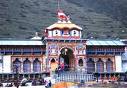
Cradled in the twin mountain ranges of Nar and Narayan is the holiest of the four main shrines, Badrinath along the left bank river Alaknanda. With the splendid Neelkanth mountains as the backdrop, it is an important destination on the scared itinerary of every devour Hindu. Once the spot was carpeted with 'badris' or wild berries and hence was famous as 'Badri Van'.
Architecture of South Indian Temples
This is the style that developed in the Dravida Desam. The Vimana and the Gopurams are the distinctive characteristics of the Southern style. The Vimana is a tall pyramidal tower consisting of several progressively smaller storeys. This stands on a square base. The Gopuram has two storeys seperated by a horizontal moulding. The Prakara or the outer wall, envelops the main shrine as well as the other smaller shrines, the tank.The Pallavas, the Cholas, the Pandyas, the Vijayanagar rulers, the Nayaks all contributed to the Southern style of temples.

The present temple was built about two centuries ago by Garhwal Kings. It is a conical structure, 15 m. tall and has small cupola of a gilt bull and spire. There are 15 idols in the temple complex, each sculpted in black stone. The principal idol represents Vishnu in a meditative posture and is flanked by Nara-Narayan. Legend dates it prior to the Vedic age though it is believed to have been re-established by Adi Shankaracharya, an important Hindu saint in 8th century A.D. Some of the other images include Laxmi (Vishnu's consort), Garud (Vishnu's mount), Shiva & Parvati and Ganesha.
The temple has been renovated several times due to damages by avalanches. It looks fairly modern now due to the colourful "Singh Dwara" or the main entrance gate. It has three parts- Garbha Griha (the sanctum sanctorum), Darshan Mandap (for pujas) and Shobha Mandap (for devotees to assemble). The revered shrine is still alive with myriad legends from mythology. Its sanctity is emphasised in the ancient scriptures as "There are many sacred spots of pilgrimage in the heavens, earth and the nether world, but there has been none equal to Badri, nor shall there be".

Mythological Legend
Legend has it, when the Ganga was requested to descend to earth to help suffering humanity, the earth was unable to withstand the force of its descent. Therefore the mighty Ganaga was split into twelve holy channels. Alaknanda was one of them that later became the abode of Lord Vishnu or Badrinath.
The temple of Shri Badrinathji on the banks of the Alaknanda river, dates back to the vedic times. Situated at an altitude of 3,133 mts., the present temple is believed to have been built by Adi Guru Shankaracharya- an 8th century's philosopher-saint, who also established a 'math' here. Also known as 'Vishal Badri', Badrinath is one of the Panch Badris.

Panch Badris or Five Badris

Besides the main temple of Badrinath there are four other smaller badri temples. These are collectively called the panch badris or five badris. Very few pilgrims however, visit the other four Badri temples.

    * Yogadhyan Badri (1920 m.)
      Closest to the main temple of Badrinath lies this tiny, sleepy hamlet which remains unnoticed by most pilgrims and is the winter home for the idol at Badrinath. Pandukeshwar is also an important archaeological site. Some years ago, four ancient metal foils engraved with a description of several kings in the region were discovered here. Believed to be over 1500 years old, these foils are kept at Joshimath, 30 km downstream.
    * Bhavishya Badri (2,744 m.)
      The bhavishya or future badri is situated at Subain near Tapovan, about 17 km east of Joshimath. According to Hindu belief, when evil is on the rise in this world, the two mountains Nara and Narayan at Badrinath will close up on each other and destroy the route to the present Badrinath. This would also mark the end of the present world and the beginning of a new one. Lord Badrinath will then appear at the Bhavishya Badri temple and be worshipped here instead of at the present one.
Adi Badri
Adi Badri is the farthest from the other four badris. It is approachable from Karnaprayag by a motorable road enroute Ranikhet. The temple complex has 16 small temples with intricate carvings.

Seven of these temples belong to the late Gupta period. Local tradition assigns these buildings to Shankaracharya. The main temple is distinguished by a pyramid shaped raised platform, with a black stone idol of Vishnu. 
Pilgrimage Attractions in Badrinath

    * Badrinath Temple
      On the right bank of Alaknanda lies the sacred spot perched at an altitude of 3,133 metres above the sea level. Encircled by a beautiful valley, the 15mtrs. High temple is dedicated to Lord Vishnu, it is built in the form of a cone with a small cupola of gilt bull and spire. Built by Adi Guru Shankaracharya - the philosopher-saint of the 8th century, the temple has been renovated several times due to damage by avalanches. Its colourful 'Singh Dwara' or the main entrance gate gives it a new, modern look.

      The temple divided into three parts - the 'garbha griba' or sanctum sanctorum, the 'darshan mandap' where the rituals are conducted and the 'sabha mandap'where devotees assemble.The complex has 15 idols. Especially attractive is the one metre high image of Badrinath, finely sculpted in black stone. It represents Lord Vishnu seated in meditative pose.
# Tapt Kund
Devotees take a holy dip in the natural thermal springs on the banks of the river Alaknanda, before entering the Badrinath Temple. The water of the kund is believed to have medicinal properties.
# Hemkund Sahib (43 kms.)
Near the Valley of Flowers is the holy lake Hemkund- an important pilgrimage of the Sikhs and Hindus. Along its shores is the sacred Sikh Shrine where Guru Gobind Singh, the tenth Guru unified with God after prolonged mediation in his previous birth.
Nearby is the Lakshman Temple where Lakshman - the brother of Lord Rama performed his penance. The reflection of surrounding snow-clad peaks in its placid waters offers a scenic sight.
# Brahma Kapal
A flat platform on the bank of river Alaknanda where Hindus perform propitiating rites for their deceased ancestors.
# Neelkanth
A Pyramidical-shaped snowy peak towering above Badrinath, popularly known as the 'Garhwal Queen'.
# Mana Village (4 kms.)
Inhabited by Indo-Mangolian tribe, it is considered to be the last Indian village before Tibet on this route. Nearby are Vyas Gufa- the rock cave of saint Ved Vyas, the writer of Mahabharata; Bhim Pul- a natural bridge over the Saraswati river and Vasundhara Falls- a 122 mts. high waterfall- all forming and important part of the pilgrimage to Badrinath.
# Mata Murti Temple (3 kms.)
On the right bank of Alaknanda stands the temple dedicated to the mother of Sri Badrinathji.
# Alka Puri (15 kms.)
The source of Alaknanda river from the glacier snouts of Bhagirath- Kharak and Satopanth glaciers.
     * Satopanth (25 kms.)
     
A three cornered lake with a circumference of about 1 km., situated at an elevation of 4,402 mts. above sea level. It is named ater the Hindu triad- Brahma, Vishnu and Mahesh, who are believed to occupy one corner each of the lake. The trek is hazardous with dramatic landscapes. An experienced guide is advisable. Govindghat (25 kms.)
      The confluence of Alaknanda and Lakshman Ganga rivers. It has an imposing Gurudwara named after Guru Gobind Singh.
    * Joshimath (44 kms.)
     
The winter home of Shri Badrinathji is situated on the slopes above the confluence of Alaknanda and Dhauliganga. It is one of the four 'maths' established by Adi Guru Shankaracharya.
    * Panch Prayag
     
The five important confluences- Deoprayag, Nandprayag, Rudraprayag, Karnaprayag and Vishuprayag, form the Panch Prayag.
    * Deoprayag
     
The confluence of Alaknanda and Bhagirathi rivers. Ancient stone scriptures are found here. Important pilgrim spots are Shiv Temple and Raghunath Temple.
    * Rudraprayag
     
The confluence of Alaknanda and Mandakini rivers. The temples of Rudranath and Chamunda Devi are noteworthy.
    * Nandprayag
     
The confluence of Alaknanda and Mandakini rivers. The Gopalji Temple is worth a visit.
    * Karnaprayag
     
The confluence of Alaknanda and Pindar rivers with temples of Uma and Karna.
    * Vishnuprayag
      T
he confluence of Alaknanda and Dhauliganga rivers. An ancient temple of Lord Vishnu stands here by a pool called Vishnu Kund.
    * Srinagar
     
The old capital of Garhwal, it is an important cultural and educational centre. Places to visit include Kamleshwar and Kilkeshwar temples and the Shankar Math.

Jagannath.puri

 Jagannath.puri

Location :     Orissa
Significance :     Capital of Orissa
Related Links :     Puri, Puri Rath Yatra


Situated on the eastern coast along the blue waters of the Bay of Bengal, Orissa offers to magnificent temples, sunny beaches, colourful wildlife,Lord Jagannath traditional tribal culture and a rich heritage. While several temples have vanished or have declined in importance, the great temple of Lord Jagannath at Puri is still a living and vibrant temple. Over the centuries it has attracted kings, conquerers, religious teachers, devotees and pilgrims. In the minds of the millions of Indians, Orissa is the land of Jagannath. This temple of Lord Jagannath at Puri is one of the most sacred pilgrimage spots in India, one of the four abodes (dhamas) of the divine that lie on the four directions of the compass.


Its Architecture
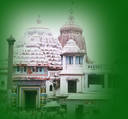
The temple of Jagannath Puri is a rekha dwell with curvilinear tower on a pancha ratha plan and was built by Ananta Barma Chodaganga Dev during 12th century A.D. and was completed by Ananga Bhima Dev. This temple is one of the tallest monuments in the country, height is about 214 feet from the ground level. It stands on an elevated platform of stone measuring about 10 acres, which is located in the heart of the down town and presents an imposing sight.. The temple has four gates at the eastern, southern, western northern midpoints of the Meghanad Prachir and are called Lions gate, Horse Gate, Tiger Gate and the Elephant Gate respectively.
Lord Jagannath
Lord Jagannath, the symbol of universal love and is worshiped in the Temple along with Balabhadra, Subhadra, Sudarshan, Madhaba, Sridevi and Bhudevi on the Ratnabedi or the bejewelled platform. The Deities, Lord Jagannath, Balabhadra, Subhadra and Chakra Sudarshan are made of margosa wood.
Maha Prasada
Maha-prasada is pure vegetarian spiritual food offered to Lord Jagannath. Just by eating this maha-prasada one makes great spiritual advancement. Every day, fifty-six varieties of prasada are offered to Lord Jagannath. The main offering of the day becomes available anywhere from 3 to 5 pm (sometimes later). The offering times are not exact and change day by day.