શુક્રવાર, 4 માર્ચ, 2011

Kailasanatha Temple - Ellora

Kailasanatha Temple - Ellora


The Kailasanatha Temple at Ellora dates back to the period of the 8th century Rashtrakoota ruler Krishna I . It is a huge rock cut  monolithic temple built in the South Indian style. Ajanta  and Ellora, near Aurangabad are well known tourist attractions. In Ellora, are also  seen several Jaina, Buddhist  caves. The Kailasanatha temple is known for its architectural grandeur as well as its sculptural splendour.
 
History: More than 30 temples have been carved from the hillside here at Ellora during the period 6th-9th centuries CE. The most spectacular of these is the Kailasanatha temple, which is a colossal monolith with an ornate exterior, all carved out of the hillside. It was built during the period 757 and 773 CE.

The Temple: The Kailasanatha temple exhibits typical Dravidian features. A gateway, an enclosure for Nandi, and a mandapam line up in front of the sanctum which is crowned with a vimanam, composed of successively receding storeys, decroated with miniature buildings.

The mandapam in front of the sanctum is an enormous hypostyle hall with carved pillars. On either side of the Nandi Mandapam are two 50 feet high obelisk like pillars decorated with frieze carvings.

A collonaded gallery running along the bottom of the cliff face, forms a deep narrow passage that surrounds the temple. In between this cliff face and the temple is the pradakshinapatha. The narrow passage mentioned above has two storeys of hypostyle halls and porticoed galleries (as in the Tiruchutru Maaligais of the Dravidian temples of Tamilnadu).

The temple covers an area of over 60000 square feet, and the vimanam (tower) rises to a height of about 90 feet. It is to be emphasized over and over again, and seen to be believed that the entire monument was made by excavation and not by construction.

The temple tower resembles the rathas at Mamallapuram near Chennai in Tamilnadu.  The Kailasanatha temple resembles the architectural style established by the Pallavas of Mamallapuram and is yet considerably grander in scale. The shikhara (vimanam) displays a profusion of sculpted images. The shore temple at Mamallapuram was built around the same time as this temple.

While the shore temple was built dressed stone, the Kailasanatha temple at Ellora was created by excavating 400 000 tonnes of rock, calling for sheer brilliance on the part of the visionaries who architected the temple plans. Architects from the southern Pallava kingdom were sought for the creation of this temple.

Other caves of interest in Ellora are the Rameshwar cave, the Sita ki Nahani cave, and several Jain caves such as the Indra Sabha cave, all dating back to the pereiod 6th-9th centuries CE.

Elephanta Caves tempal

 Elephanta Caves tempal

The Elephanta Caves are a  great tourist attraction in the vicinity of the large Mumbai meteropolis. The Elephanta island is located 10 km away from the Gateway of India at Mumbai. These caves house rock cut temples dating back to the 5th century CE.

 elephanta.jpg (26015 bytes)


The Elephanta island was so named by the Portuguese, after the statue of an elephant near the landing area of the island. These rock cut temples dedicated to Shiva Mahadeva are rich in sculptural content. Motorboats take passengers from Appollo Bunder near the Gateway of India. .

How They were Constructed: This rock cut temples were created by carving out rock, and creating the columns, the internal spaces and the images. The entire temple is akin to a huge sculpture, through whose corridors and chambers one can walk. The entire complex was created through a process of rock removal. Some of the rock surfaces are highly finished while some are untreated bare rock.

The entire cave temple complex covers an area of about 60000 squrare feet and it consists  a main chamber and two lateral ones , courtyards and several subsidary shrines. Above the temple is the mass of natural rock.

There are three entrances to this temple. The ones on the east and the west marking the axis of the temple. A 20 pillared hall lines the axis, and on its western end is the cella in shich is enshrined a Shivalingam. The pillars consist of fluted columns standing on square bases, and are crowned with fluted cushion capitals.

The enigmatic image of Trimurthi Sadasiva: The Sadasiva manifestation of Shiva is carved in relief at the end of the north south axis.  This collossal 20 feet high  image of the three headed Shiva, Trimurthy is a magnificient one, considered to be a masterpiece of Indian art.  This colossal image represents Panchamukha Shiva, only three faces of whom are carved into the wall and it demands immediate attention upon entering the temple through the northern entrance. See All About Shiva for more information on Panchamukha Shiva.


Also on the southern wall are grand sculptured images of Kalyanasundara, Gangadhara, Ardhanariswara and Uma Maheswara. To the west of the northern entrance are sculptured images of Nataraja and Andhakaasuravadamoorthy, and to its east are images of Yogiswara and Ravanaanugrahamurthy.

Thus in the Elephanta caves, Shiva is portrayed in the non anthropomorphic Shivalingam form, as well as in his quintessential being emanating from the Shivalingam in the colossal image, and in 8 manifest forms.

To the east of the main temple is a courtyard, flanked by the secondary shrine. This temple contains six pillars at its entrance, four of which are free standing and two engaged. The entrance leads to a hall decorated with sculptured panels depicting legends from the Shiva Purana.

Nasiyan Jain Temple

Nasiyan Jain Temple

 Location:      At Prithviraj Marg, Ajmer
Built in:     1865
Dedicated to:     Lord Adinath
Attraction:     Museum with gilded sculptures
Significance:     One of the best Jain Temples across Rajasthan
How to reach:     One can easily reach Nasiyan Temple by taking regular Buses or by hiring Taxis from anywhere in Rajasthan

Nasiyan TempleThe renowned Nasiyan Jain Temple is to be found at Prithviraj Marg in Ajmer, Rajasthan. After the temples of Ranakpur and Mount Abu, Nasiyan temple is regarded as one of the best Jain temples in Rajasthan. Built in 1865, Nasiyan Temple is also known as Lal Mandir (Red Temple). Centrally located in Ajmer, the temple can be reached easily from anywhere in Rajasthan. Nasiyan Digambar Jain Temple is dedicated to Lord Adinath, the first Jain 'tirthankara'.


The two-storied structure of Nasiyan Temple is divided into two parts, where one is the worship area comprising the idol of Lord Adinath and the second is the museum including a hall. The museum hall gets the major attention due to its mind blowing interiors made up in gold. This exquisite museum depicts the five stages (Panch Kalyanak) in the life of Lord Adinath, in the stature of statues. With the dimensions of 40 x 80 feet, the hall is adorned with Belgium stain glass, mineral color paintings and stain glasswork.

The astonishing and inimitable display of the shrine, made it to be recognized, as the Golden Temple (Swarna Mandir). The focal hall is made surprisingly beautiful with gold and silver decorations. Digambar Jain Temple displays marvelous wooden gild representations, glass engravings and paintings, recounting the conviction of the Jainism with reference to the making of the world. Festooned by precious stones, gold and silver work, the place is also termed as Soni Ji Ki Nasiyan.

The celestial appearance of the temple creates a kind of divine aura that appeals to the mind of pilgrims and devotees. In the inner prayer chamber, small silver balls hanging from the ceiling absolutely enthrall the onlooker. The posh interiors of the temple boast of the aesthetic and rich taste of the Digambar Jains. In the vein of other Jain architecture, Nasiyan Temple has high fortifications encircling the temple complex. Jain Temple receives devotees, who come to pay their homage to Lord Adinath, from all over India.


Nasiyan Jain Temple also known as the Red Temple and located on Prithviraj Marg, this Digambar Jain temple was built in 1865. The main chamber consists of a double storeyed hall in which are housed large wooden figures portraying the Jain concept of the world. The hall is decorated lavishly with precious gems, gold and silver. The Nasiyan temple is one of the finest Jain temples in Rajasthan after the temples of Ranakpur and Mount Abu and is open to visitors from 8:30 a.m. to 4:30 p.m. with an entry fee of Rs 2. Rajasthan Jain Temples

Speaking of Jain temples, western India namely Rajasthan is renowned for its dazzling temples built by rich Jain merchants. Jain temples are the richest in India and their splendour surpasses Mughal architecture at its best. With marble as the central theme, Jain temples boast of amazing finesse apparent in intricate carvings especially on ceilings and pillars. Jainism continued to make its subtle impact even during the Mughal rule, with the only difference being that at times Jain temples were built on the lines of a fort with a high wall surrounding the entire complex.
 

Kiradu Ancient Temples

Kiradu Ancient Temples

 Distance : 39 km from Barmer

Kiradu Ancient Temples lie at a distance of 39km from Barmer city in Hathma village.You find an inscription here dating back to 1161AD indicating that the place was once called Kiratkoop and had once been the capital of the Panwara dynasty. The Panwaras owed their allegiance to the rulers of Gujarat at the time.


¤ Kiradu Someshvara Temple


The Kiradu temples are a group of five temples and are grouped as ancient temples, an important site from the archaeological point of view. The largest and the most impressive amongst them is the Someshvara Temple. Built in the 11th century, the Someshvara ancient temple is said to be the best example of its kind today. Constructed in honour of Lord Shiva (the Destroyer in the holy trinity of Hindu gods), it has a rather stumpy multi-turreted tower and beautiful sculptures dedicated to the god. The inner sanctum has a resplendent image of the Lord. At its base, is a large reverse-curve lotus, which has a resemblance with the early Chola Temples of south India. This ancient temple also depicts scenes from the Hindu epic Ramayana. Other notable features are sculptures of apsaras (mythical dancing girls from the abode of the Gods) and vyalas (a griffin-like mythical beast generally associated with the Buddha) which were rarely seen after 1050AD in temple architecture. All in all, although Barmer is a bit out of the way you’ll get your money’s worth when you visit Someshvara.


¤ Other Group of Ancient Temples


The other four temples, also considered as ancient are dedicated to Lord Shiva and Vishnu (the Preserver in the holy trinity of Hindu deities). The temples show the influence of the Solanki school of architecture which originated in Gujarat, which is not surprising given the close links the Panwaras had with the rulers there.


Madurai


Madurai


Location : Madurai, Tamil Nadu
Area : 22 Sq. Kms
Attractions : The Meenakshi Temple, Mariamman Teppakulam,Tirumalai Naik
Ideal Time to Visit : November to February

¤ Madurai, The Temple City


Tamil Nadu travel guide will takes you to another temple city of South India. Madurai is the second largest city of the state of Tamil Nadu. It is famous for its temples, especially for the celebrated Meenakshi Temple. Situated on the banks of river Vaigai, it derives its name from the divine nectar (Madhu) that was showered from the locks of Lord Shiva according to a popular legend. The city has a rich cultural heritage which it has inherited from the great Tamil era, which is more than 2500 years old. Once the capital of the great Pandya kings, Madurai was an important cultural and commercial center even as early as 550 AD.
temple at Madurai
Today, Madurai is a well-known producer of some of the finest textiles in India and some of the best harvests of jasmine flowers. The city of Madurai is also mentioned in Megasthenes' Indica. He was an ancient Greek diplomat and envoy to India in the 3rd century BC , who wrote praises about this temple city. Madurai's glory reached its peak, during the reign of the Cholas and then during the Pandyas' regime in the 13th century.


¤ History of Madurai

Madurai, the city is as old as its history, which dates back to the Sangam period of the pre Christian era. Madurai's honour returned in an impaired form in the earlier part of this millennium. Later, Madurai came under the rule of the Vijayanagar kingdom, after it was plundered by the destructive armies of Delhi (Malik Kafur).

During the 16th and 18th centuries, Madurai was ruled by the Nayak Emperors, the foremost of whom was Tirumalai Nayakar. In the Sangam period, poet Nakkeerar was associated with some of the Tiruvilayaadal episodes of Sundareswarar. Even today these episodes are enacted as a part of temple festival traditions.


¤ Attractions At Madurai

The ancient and historical city of Madurai has many places that pulls tourists from all over the world and makes it one of the most travel destinatiions in South India. Among the most famous attractions at Madurai, is the Meenakshi Amman Temple, where the main deities are Goddess Meenakshi and Lord Shiva. The temple has 985 beautifully sculptured pillars, forming the Thousand Pillar Mandapam Hall. It has also been the center of Tamil art, music and dance.

The Vandiyur Mariamman Teppakulam is another prime attraction in Madurai. The presiding deity of this temple is Lord Vigneshwara. This temple is also the host of the annual float festival celebrated in the months of January and February. Thirupparankundram, situated 6 kms southwest of Madurai, is a small town known for its sacred granite hill. This place is regarded as one of the six dwellings of Lord Subramaniyam.

There is also a cave temple and a rock cut temple built by the Pandyas in the 8th century. Besides these attractions, Munnar, Thekkadi Wildlife Sanctuary and Palani Hills are other places of interest around Madurai.


¤ Excursions

Meenakshi TempleMadurai travel offer a number excursion options, which are exciting and intriguing. Some of the important ones are Vaigai Dam situated at a distance of 69 km, on the way to Thekkady. It is a beautiful picnic spot and is popular with the tourists and locals alike. Situated in the Western Ghats at a height of 2,130 m above sea level, Kodaikanal is a picturesque hill station. It is about 120 kms away from Madurai. The Periyar Wildlife Sanctuary is situated at a distance of 155 km from Madurai. The sanctuary is famous as the natural habitat for a wide variety of animals.


¤ Shopping At Madurai

Shopping at Madurai can be fun, here you can buy cotton and batiks, for which Madurai is famous. The Prithu Mandapam Market is a famous market of Maduari, situated just inside the eastern entrance of the Meenakshi Temple. Let yourself relax and visit the Pottramarai tank to feel the essence of Maduari.


¤ Festivals At Maduari

Festivals are celebrated in all twelve Tamil months at Madurai Meenakshi temple. Some of the popular festivals are Chithirai festival celebrated in the months of April - May and Avanimool festival celebrated in the months of September - Ocotber. Other important festivals are the Navarathri Festival and the Float Festival celebrated in the months of January- February.


¤ Reach Madurai

By Air : Madurai has its own airport situated 10 kms away from the city. There are daily flights to Madurai from Chennai, Bangalore, Tiruchi & Coimbatore.

By Rail : Madurai is an important railway junction of the Southern Railway and is directly connected to Chennai and Tirunelveli. Madurai is on the Madurai-Tiruchirappalli-Dindigul-Quilon route.

By Road : The city has excellent roads connecting Madurai to all parts of South India. It has 5 Major bus stand.

Madurai is one of the oldest cities of India, with a history dating all the way back to the Sangam period of the pre Christian era. The glory of Madurai returned in a diminished form in the earlier part of this millennium; it later on came under the rule of the Vijayanagar kingdom after its ransack by the ravaging armies of Delhi (Malik Kafur). During the 16th and 18th centuries, Madurai was ruled by the Nayak Emperors, the foremost of whom was Tirumalai Nayakar. The Sangam period poet Nakkeerar is associated with some of the Tiruvilayaadal episodes of Sundareswarar - that are enacted as a part of temple festival traditions even today.


The Sangam age or the Golden age of Tamil literature – produced masterpieces way back in the Pre christian era and in early 1st millennium . Madurai was the seat of the Tamil Sangam or Academy of learning. The entire city of Madurai, is built around the Meenakshi Sundareswarar Temple – the temple par excellence. Concentric rectangular streets surround the temple, symbolizing the structure of the cosmos.

As early as the 3rd century BC, Megasthanes visited Madurai. Later many people from Rome and Greece visited Madurai and established trade with the Pandya kings. Madurai flourished till 10th century AD when it was captured by Cholas the arch rivals of the Pandyas.

The Cholas ruled Madurai from 920 AD till the beginning of the 13th century. In 1223 AD Pandyas regained their kingdom and once again become prosperous. Pandian Kings patronised Tamil language in a great way. During their period, many master-pieces were created. "Silapathikaram", the great epic in Tamil was written based on the story of Kannagi who burnt Madurai as a result of the injustice caused to her husband Kovalan. In April 1311, Malik Kafur, the general of Alauddin Khilji who was then the ruler of Delhi, reached Madurai and raided and robbed the city for precious stones, jewels, and other rare treasures. This led to the subsequent raids by other Muslim Sultans. In 1323, the Pandya kingdom including Madurai became a province of the Delhi empire, under the Tughlaks.

The 1371, the Vijayanagar dynasty of Hampi captured Madurai and it became part of the Vijayanagar empire. Kings of this dynasty were in habit of leaving the captured land to governors called Nayaks. This was done for the efficient management of their empire. The Nayaks paid fixed amount annually to the Vijayanagar empire. After the death of Krishna Deva Raya (King of Vijayanagar empire) in 1530 AD, the Nayaks became independent and ruled the territories under their control. Among Nayaks, Thirumalai Nayak (1623-1659) was very popular, even now he is popular among people, since, it was he who contributed to the creation of many magnificent structures in and around Madurai. The Raja Gopuram of the Meenakshi Amman Temple, The Pudu Mandapam and The Thirumalai Nayakar's Palace are living monuments to his artistic fervor.
Madurai started slipping into the hands of the British's East India Company. In 1781, British appointed their representatives to look after Madurai. George Procter was the first collector of Madurai.

Now after India's independence, Madurai is one of the major districts of Tamilnadu State. Later on Madurai district was bifurcated into two districts namely Madurai and Dindugul Districts. In Madurai District, there are 15 State Assembly constituencies and two parliament constituencies.

The history of Madurai will not be complete without mentioning the name of RaniMangammal, the woman of great skill and sagacity. History does not provide many instances of ruling queens in Tamil Nadu. Though it was considered that women were not suited to succeed the throne of a kingdom, Rani Mangammmal, however shines in almost solitary eminence as an able and powerful ruler in Tamil Nadu.

Madurai is famous for its temples.The Aappudaiyaar Koyil Tevara Stalam and the Koodalazhagar Divya Desam are the most important temples one should rarely miss to go. In the vicinity of Madurai is Tirupparamkunram, one of the 6 padai veedu shrines of Murugan (glorified in Madurai Sangam Nakeerar’s Tirumurugaatruppadai). Also in the vicinity of Madurai is Alagar Koyil, one of the prominent Divya Desam shrines of the Sri Vaishnavite faith.

Birla Mandir

Birla Mandir

Also Known As Lakshmi-Narayan Mandir
¤ Also Known As Birla Mandir


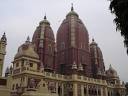
Strictly speaking, this structure is not part of the New Delhi Lutyens designed. Famous Birla Mandir in Delhi is essentially a Hindu temple which came up alongside with New Delhi and has therefore been pegged with it. Popularly known as the Birla Mandir, it is the first of the temples built across the country by the industrial family of Birla. Located just off Connaught Place on Mandir Marg, it is dedicated to Vishnu, the second of the Hindu Trinity of creator-preserver-destroyer, and his consort Lakshmi, the Goddess of wealth.


¤ The Most Important Temples of Hindus

Built in 1938, famous Birla Mandir in Delhi was inaugurated by Mahatma Gandhi (Father of the Indian Nation) on the express condition that people of all castes and especially untouchables would be allowed in. (Refer to section People). Consequently a plaque at the gate reiterates that people of all faiths and classes are welcome. Till date, it remains one of the most popular temples in Delhi.


¤ The Architectural Brilliance of The Birla Mandir (Temple)

Birla Mandir is also famous for the festival of Janmashtami (birth of the Hindu deity Krishna). The festival is celebrated here with much goodwill and cheer.


The temple is designed in the Orissan style, with tall curved towers capped by large amalakas (circular ribbed motif at the summit of a temple tower). The exterior is faced with the white marble and red sandstone typical of Delhi’s Mughal architecture. The interior court is overlooked by two-storey verandahs on three sides; there are gardens and fountains at the rear. The profusion of sculptures, idols, spires and jalis, the Birla Mandir in Delhi is also considered as splendor in terms of its architecture.


Lotus Temple

Lotus Temple


Lotus Temple - a modern of Delhi is one such temple that facilitates the Bhai's Faith of Worship. The Baha’i House of Worship is dedicated to the oneness of all religions and mankind. Subsidiary buildings that afford relief to the suffering, sustenance to the poor, shelter to the wayfarer, solace to the bereaved and education to the ignorant will abound around the House of Worship.

There is no clergy in the Baha’i Faith and its service consists of prayers and readings of selections from Baha’i scriptures, and religious texts of the other faiths of the world.


¤ The Bahai's Faith

The Baha’is lay great emphasis on prayer and meditation. These, they believe are important instruments for the progress of the human soul, both in this world and the next. The Baha’is pray to one God, the Creator of the Universe.


The act of praying is described as ‘Conversation with God’.Meditation is perceived as the ‘Key for opening the doors of mysteries’. In that state, man withdraws himself from all outside objects and immerses himself in the ocean of spiritual life.

In the Baha’i Holy Writings, there are prayers for all occasions. Prayers can be offered individually or collectively. Great importance is given to prayers as is revealed in all the Scriptures.

However, the Baha’i Writings specify that the mere act of praying is not sufficient. The inspiration drawn from one's prayers must be translated into action that promotes the well being of humanity.


Worship

As with all other Bahá'í Houses of Worship, the Lotus Temple is open to all regardless of religion, or any other distinction, as emphasized in Bahá'í texts. The Bahá'í laws emphasize that the spirit of the House of Worship be that it is a gathering place where people of all religions may worship God without denominational restrictions.[2] The Bahá'í laws also stipulate that only the holy scriptures of the Bahá'í Faith and other religions can be read or chanted inside in any language; while readings and prayers can be set to music by choirs, no musical instruments can be played inside. Furthermore no sermons can be delivered, and there can be no ritualistic ceremonies practiced.[2]
Structure
Bahá'í House of Worship
Lotus Temple at sunset

All Bahá'í Houses of Worship, including the Lotus Temple, share certain architectural elements, some of which are specified by Bahá'í scripture. `Abdu'l-Bahá, the son of the founder of the religion, stipulated that an essential architectural character of a House of Worship be that it requires to have a nine-sided circular shape.[3] Inspired by the lotus flower, its design is composed of 27 free-standing marble clad "petals" arranged in clusters of three to form nine sides.[4] While all current Bahá'í Houses of Worship have a dome, they are not regarded as an essential part of their architecture.[5] Bahá'í scripture also states that no pictures, statues or images be displayed within the House of Worship and no pulpits or altars be incorporated as an architectural feature (readers may stand behind simple portable lecture stands).[2] The nine doors of the Lotus Temple open onto a central hall, capable of holding up to 2,500 people. The central hall is slightly more than 40 meters tall[6] and its surface is made of white marble. The white marbles are from Penteli mountain in Greece, the very same from which many of the ancient monuments were built and also many other Bahai temples[7]. The House of Worship, along with the nine surrounding ponds and the gardens around comprise 26 acres (105,000 m²; 10.5 ha).


The site is in the village of Bahapur, in the National Capital Territory of Delhi. The architect was an Iranian, who now lives in Canada, named Fariborz Sahba. He was approached in 1976 to design it, later oversaw its construction and saved money from the construction budget to build a greenhouse to study which indigenous plants and flowers would be appropriate for the site.[8] The major part of the funds needed to buy this land was donated by Ardishír Rustampúr of Hyderabad, who gave his entire life savings for this purpose in 1953. [9]
Tourism

Since its inauguration to public worship in December 1986, the Bahá'í House of Worship in Delhi has, as of late 2002, attracted more than 50 million visitors, making it one of the most visited buildings in the world.[10] Its numbers of visitors during those years surpassed those of the Eiffel Tower and the Taj Mahal. On Hindu holy days, it has drawn as many as 150,000 people; it welcomes four million visitors each year (about 13,000 every day or 9 every minute).

This House of Worship is generally referred to as the "Lotus Temple". In India, during the Hindu festival Durga Puja, several times a replica of the Lotus Temple has been made as a pandal, a temporary structure set up to venerate the goddess Durga.[11] In Sikkim a permanent replica is of the Hindu Legship Mandir, dedicated to Shiva. [12]
Distinctions
View of the Bahá'í House of Worship at night

The Temple has received wide range of attention in professional architectural, fine art, religious, governmental and other venues.
Awards

    * 1987, the Architect of the Bahá'í House of Worship, Mr. Fariborz Sahba an Iranian born was presented the award for excellence in religious art and architecture by the UK-based Institution of Structural Engineers for producing a building "so emulating the beauty of a flower and so striking in its visual impact".[13]
    * 1987, the Interfaith Forum on Religion, Art and Architecture, Affiliate of the American Institute of Architects, Washington, D.C., gave their First Honour award for "Excellence in Religious Art and Architecture" 1987 to Mr. F. Sahba for the design of the Bahá'í House of Worship near New Delhi.[1]

A pond surrounds the Lotus Temple

    * 1988, the Illuminating Engineering Society of North America conferred the Paul Waterbury Outdoor Lighting Design Award - Special Citation for Exterior Lighting[1]
    * 1989, the Temple received an award from the Maharashtra-India Chapter of the American Concrete Institute for "excellence in a concrete structure".[1]
    * 1994 edition of Encyclopaedia Britannica, in its 'Architecture' section gives recognition to the Temple as an outstanding achievement of the time.[1]
    * 2000, Architectural Society of China as one of 100 canonical works of the 20th century in the recently published "World Architecture 1900-2000: A Critical Mosaic, Volume Eight, South Asia."[14]
    * 2000, GlobArt Academy in Vienna presented its "GlobArt Academy 2000" award to the architect of the Lotus Temple, Fariborz Sahba, for "the magnitude of the service of [this] Taj Mahal of the 20th century in promoting the unity and harmony of people of all nations, religions and social strata, to an extent unsurpassed by any other architectural monument worldwide."[14]

Publications
Articles
Dawn in Delhi

As of 2003 it had been featured in television programmes in India, Russia and China. The Baha'i World Centre Library has archived more than 500 publications which have carried information on the Temple in the form of articles, interviews with the Architect and write-ups extolling the structure.[1]


    * In France, the magazine "Actualite des Religions" published a four-page article on the Lotus Temple in the fall of 2000 in a special edition called "Les religions et leurs chef-d'œuvres" (Religions and Their Masterpieces).[15][1]
    * Guinness World Records 2001
    * Architecture (magazine) Sept. 1987
    * Lighting Design+Application Vol 19, No. 6, Illuminating Engineering Society of North America "Taj Mahal of the Twentieth Century"
    * Wallpaper* October 2002
    * Progressive Architecture, February[1] and again December 1987
    * World Architecture: A Critical Mosaic 1900-2000, Vol 8, by Kenneth Frampton, Springer-Verlog Wien publishers, New York - "A power icon of great beauty ... an import symbol of the city."
    * Faith & Form - Journal of the IFRAA affiliate of the American Institute of Architects, Vol XXI "an extraordinary feat of design, construction and appropriateness of expressions"
    * Structural Engineer, UK (annual) Dec. 1987
    * Encyclopaedia Iranica 1989